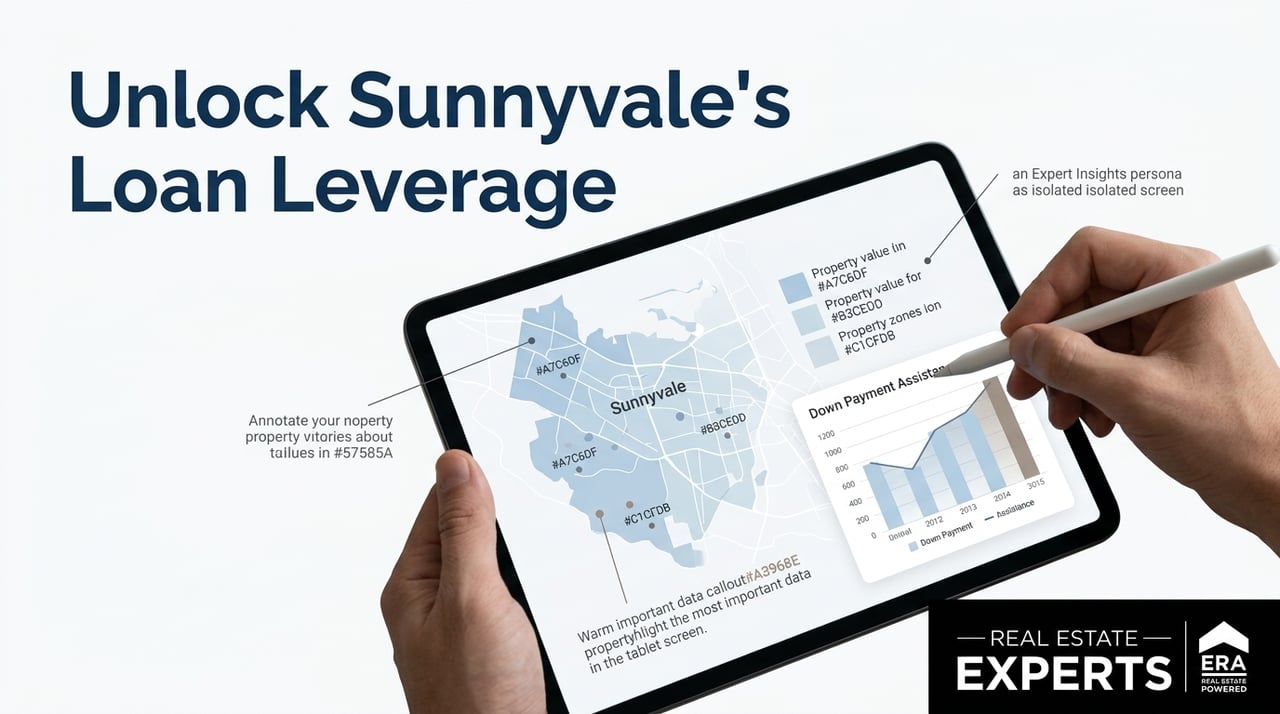
Buying your first home in Silicon Valley can feel intimidating, even with a strong income and growing stock equity. The assumption is often that assistance is only for low-income earners, but the reality is much different for today's buyers. Exploring the right Sunnyvale loan programs can unlock incredible leverage for tech professionals looking to preserve their liquidity. Our approach is not about stretching into the biggest home you can qualify for, but rather helping you define your comfort zone and make a confident financial decision.
The Reality of the Sunnyvale Real Estate Market
Sunnyvale is not a single, uniform market when it comes to real estate pricing and property types. Home values swing significantly depending on your exact neighborhood, with North Sunnyvale properties sitting closer to $1.4 million while South Sunnyvale homes near Cupertino often exceed $2.3 million. The 2026 baseline conforming loan limit for Santa Clara County is $1,249,125, which means many buyers automatically assume they need traditional jumbo financing for any purchase. However, buyers looking at townhomes or properties in specific northern zip codes can still leverage high-balance conventional options.
Understanding these local micro-markets is a strategic move for your lifestyle and future property appreciation. Sunnyvale sits at the core of Silicon Valley, boasting easy commutes to major tech campuses like Apple and LinkedIn alongside high-performing public schools. Homes zoned for Homestead High School command top-tier pricing, meaning your financing strategy must be dialed in before you even start touring open houses. We provide data-driven insights into these growth potentials to help you envision not just where you will live, but where your investment will thrive over the long term.
Overcoming the RSU Withholding Gap
Many first-time buyers in tech grapple with how to best leverage restricted stock units or year-end bonuses for a substantial down payment. Lenders view your company stock in two distinct ways: as liquid cash for your closing costs and as consistent qualifying income for your monthly mortgage payment. Under the latest Fannie Mae guidelines updated in 2026, RSU income only counts if the shares are publicly traded and backed by at least twelve months of vesting history with your current employer. Navigating these strict underwriting rules requires a strategic partner who understands exactly how underwriters calculate your effective income.
One major hurdle that catches tech employees off guard is the federal withholding gap on newly vested stock. The standard 22 percent federal withholding on most vests is often well below the 37 percent top tax bracket that high earners fall into. This means a massive stock vest might leave you with significantly less liquid cash than you initially projected for your home purchase. By projecting these tax liabilities early, we ensure your financial assets work smartest for your homeownership goals without causing a last-minute scramble for funds.
Asset Depletion and Pledged Asset Lines
Instead of selling off your stock and triggering a massive capital gains tax bill, you can leverage your portfolio through creative financing structures. Pledged asset lines allow you to borrow against your investment portfolio, securing your cash to close without liquidating your hard-earned equity. This approach provides incredible flexibility, letting your investments continue to grow while you secure your foothold in the highly competitive Silicon Valley housing market. It is a fantastic avenue for buyers who want to maintain liquidity for future investments or tech startup opportunities.
Asset depletion loans offer another brilliant strategy for tech buyers who have significant wealth tied up in liquid assets rather than standard W-2 income. Underwriters calculate a monthly income stream based on your total eligible assets, dividing that balance over a set period to boost your qualifying borrowing power. These specialized lending tools bridge the gap for founders, early employees of newly public companies, and those navigating complex compensation packages. Choosing these alternative routes is about making a confident, financially sound decision that truly builds your net worth.
Sunnyvale Loan Programs and Down Payment Assistance
There is a massive misconception that California state assistance programs are exclusively designed for low-income households or buyers purchasing inexpensive properties. The 2026 CalHFA tables actually allow qualifying incomes up to $325,000 in Santa Clara County, making these programs incredibly viable for dual-income tech households. These overlooked Sunnyvale loan programs completely change the math for high earners who are struggling to save a massive cash down payment while paying premium Bay Area rent. State assistance is a strategic tool for wealth building, not just a safety net for struggling buyers.
Programs like the CalHFA MyHome Assistance Program offer a deferred second loan that covers up to 3.5 percent of your purchase price. The term "deferred" means you make no monthly payments on that specific balance until you sell the property, refinance the mortgage, or pay off the primary loan entirely. Using these deferred options allows you to keep more of your own cash invested in the stock market while still securing an excellent property. We will walk you through the practical considerations, from understanding the tax implications to choosing the right participating lender.
It is important to remember that combining state assistance with federal loans requires careful attention to the fine print. Buyers with strong credit profiles often pair the MyHome assistance with a conventional first mortgage to avoid the permanent mortgage insurance associated with FHA loans. The application process mirrors a standard purchase loan, meaning there is no separate, drawn-out state application to delay your closing timeline. A well-prepared file typically closes in the standard thirty-day window, allowing your offer to stand strong against competing bids.
Relationship Pricing and Tech Banking Discounts
Large retail banks and specialized wealth management firms actively compete for the long-term business of Silicon Valley tech professionals. Institutions frequently offer substantial relationship pricing discounts on jumbo mortgages for clients who move their primary banking to their platform. By transferring a portion of your stock portfolio or savings into their ecosystem, you can qualify for significant interest rate reductions or generous closing cost credits. This specialized banking strategy is frequently overlooked by first-time buyers who assume all lenders will offer them identical pricing!
Securing these relationship discounts requires thoughtful preparation well before you start writing offers on Sunnyvale properties. You need to identify which institutions offer the best synergies with your current asset allocation and timeline for buying. The long-term savings over the life of your loan can easily amount to tens of thousands of dollars, far exceeding the minor inconvenience of transferring funds. Our goal is to help you manage and grow your wealth through real estate, and optimizing your interest rate is a foundational part of that mission.
Evaluating Rent Versus Buy Math in the Bay Area
Many prospective buyers get caught up in comparing their current monthly rent directly against a projected mortgage payment. This simple comparison ignores the substantial wealth-building mechanics of principal paydown and long-term property appreciation in Silicon Valley. In markets like Sunnyvale, a property must generally gain a modest percentage annually to outpace the returns of keeping your down payment in an index fund. However, utilizing the right financing tools allows you to capture that real estate appreciation while simultaneously keeping a portion of your wealth liquid in the stock market.
When you account for the tax deductions associated with mortgage interest and property taxes, the true cost of homeownership becomes much more competitive. Tech professionals with high taxable incomes benefit the most from these deductions, effectively lowering their monthly carrying costs. We help you look beyond the initial sticker shock to model the complete financial picture over a five or ten-year holding period. This comprehensive approach ensures you are making a confident, financially sound decision that truly builds wealth over your lifetime.
Structuring Your Offer Strategy in Santa Clara County
Choosing the right financing is only half the battle when competing in a market where well-priced homes regularly draw multiple aggressive offers. You need to structure your loan approval so that your financing appears just as solid and reliable as an all-cash offer to a prospective seller. Working with a local lender who understands the nuances of Santa Clara County pricing gives you a definitive edge during the negotiation phase. They can quickly verify your complex tech income, ensuring the listing agent has zero doubts about your ability to close.
We combine deep local market expertise with expert-level negotiation to ensure your offer stands out in the crowded Sunnyvale landscape. Our team thoroughly vets your pre-approval letter and financing strategy before we submit a single document to the seller. If you are ready to explore how these unique lending strategies fit your specific financial picture, you can browse our resources at the Real Estate Experts website. We are committed to delivering a level of service and strategy that far exceeds your expectations.
Frequently Asked Questions
What is the high-cost loan limit for Sunnyvale in 2026?
The high-cost conforming loan limit for Santa Clara County is $1,249,125 for a single-family home. Any mortgage amount exceeding this threshold will generally require a jumbo loan product from your chosen lender. Knowing this exact limit helps you target specific price points to keep your financing costs fully optimized.
Can I use unvested RSUs to qualify for a mortgage?
Lenders strictly require your RSUs to be vested and publicly traded to count toward your usable down payment cash. For income qualification, standard underwriting generally requires a twelve-month history of receiving RSU income from your current employer. While unvested shares are excellent for your long-term net worth, they cannot be used to calculate your immediate borrowing power.
Are there income limits for state assistance?
Yes, but the limits are significantly higher than most Silicon Valley buyers initially assume. In 2026, certain CalHFA programs allow a qualifying household income of up to $325,000 for residents purchasing in Santa Clara County. This generous cap makes state-sponsored assistance highly accessible for many mid-level engineering and management professionals.
Make a Confident and Financially Sound Decision
Ultimately, buying a home in Silicon Valley should be an exciting step toward growing your wealth, not a source of constant financial anxiety. We combine deep local market expertise with a data-driven pricing strategy to help you navigate these complex financing options seamlessly. Our promise is simple: we deliver a level of service, strategy, and results so valuable that our clients feel our guidance far exceeds the commission paid. If you want to dive deeper into your options, we invite you to connect with our team at Real Estate Experts to start planning your move 🚀.